
Thompson Trenchless provides complete sewer line replacement services throughout Wyandotte, Monroe, and Downriver Michigan using advanced trenchless technologies that install new pipes without extensive excavation. When your sewer line is beyond repair—completely collapsed, severely deteriorated, or failed throughout—traditional replacement required destroying your entire property with massive trenching costing $20,000-$50,000. Our trenchless replacement methods install brand new 100+ year pipes while preserving your landscaping, driveway, and property value.
We specialize in replacing all sewer line types including collapsed cast iron, deteriorated clay tile, failed orangeburg pipe, and severely bellied lines. Using pipe bursting and other trenchless methods, we install new HDPE or PVC pipes that last 100+ years—eliminating sewer problems permanently. Our process includes comprehensive video inspection, expert consultation on repair vs. replacement decisions, and professional installation with lifetime warranties.
With 30+ years experience serving Wayne County and Monroe County, we help homeowners make informed decisions about when replacement makes sense versus attempting repair. Return to our drain cleaning hub to explore all our sewer services.


Not every damaged sewer line requires replacement. Many problems respond well to trenchless repair methods like CIPP lining that cost significantly less while providing comparable longevity. The key question: does your pipe maintain enough structural integrity to accept repair?
Consider Repair When: Pipe maintains basic shape and structure, damage is localized or moderate (under 60% of line), cracks and breaks but pipe hasn’t collapsed, root damage but pipe walls remain intact, corrosion present but structure sound. Repair typically costs $5,000-$15,000 with 50-100 year results.
Replacement Needed When: Pipe completely collapsed with no remaining structure, severe deterioration throughout entire length (60%+ of line), orangeburg pipe delaminated and disintegrating, extreme bellying creating permanent sags, pipe diameter inadequate for current needs, code compliance requires complete replacement, multiple repair attempts already failed. Replacement costs $10,000-$25,000 trenchless but provides 100+ year solution.
Our honest assessment helps you choose wisely. We recommend repair whenever viable because it costs less and works excellently. When replacement is truly necessary, we explain exactly why and provide options.
Recurring Backups After Repairs: If you’ve had your sewer line cleaned or repaired multiple times but problems keep returning, the line has deteriorated beyond simple repair. Recurring issues indicate structural failure requiring replacement.
Multiple Problem Areas: Camera inspection showing damage throughout the entire line (not just isolated sections) indicates replacement is more practical than attempting repair at numerous locations.
Severe Age and Material Issues: Original cast iron from 1920s-1950s often completely deteriorated, clay tile from pre-1970 homes frequently separated at every joint, orangeburg pipe (fiber conduit) from 1950s-1970s delaminated and crushed. These materials reach end of serviceable life requiring replacement.
Persistent Sewage Odors and Soggy Yard: Continuous sewage smells in yard despite cleaning indicate extensive leaking throughout line. Multiple soggy areas suggest widespread pipe failure.
Foundation Settlement or Cracking: Sewer line failures beneath foundations cause soil erosion leading to settlement. This serious situation typically requires both foundation repair and complete sewer line replacement.
Cast Iron (Installed 1900-1980): Expected lifespan 50-80 years. Lines installed before 1970 approaching or past service life. Interior corrosion from hydrogen sulfide eventually perforates walls. If your home has original cast iron 50+ years old, proactive replacement prevents emergency failures.
Clay Tile (Installed pre-1970): Expected lifespan 50-75 years. Tiles separate at joints as mortar deteriorates. Root intrusion at every joint eventually destroys flow capacity. Clay tile over 60 years old typically needs replacement.
Orangeburg Pipe (Installed 1950-1970s): Expected lifespan 30-50 years. This fiber-based pipe compresses, deforms, and delaminates under soil pressure. Any orangeburg pipe warrants immediate inspection and likely replacement.
Early PVC (Installed 1970-1980): While modern PVC lasts 100+ years, early installations sometimes used inferior grades or poor installation practices. Issues with early PVC may require replacement.
How It Works: Insert bursting head into existing failed pipe. Pull bursting head from one access point to another using cable system. As bursting head advances, it fractures old pipe outward into surrounding soil while simultaneously pulling new HDPE pipe behind it. Result: brand new pipe along same path as old pipe without excavating trench.
Best For: Completely collapsed pipes, severely deteriorated lines, situations requiring diameter increase (can upsize 2-4 inches), replacing any pipe type (cast iron, clay, orangeburg, old PVC), longest sections (up to 600+ feet in single pull).
Process Details: Create two access points (typically 3×4 foot pits) at line ends—usually at house foundation and street connection. Thread bursting cable through old pipe. Attach bursting head and new HDPE pipe. Pull bursting head through, fracturing old pipe and displacing it into soil. New pipe follows immediately behind. Make connections at both ends. Test and backfill access pits.
Advantages: Works when pipe completely collapsed (no structure remaining), installs entirely new pipe (not repair), HDPE pipe lasts 100+ years, can increase diameter, stronger than original pipes, resistant to root intrusion, no joints to separate, costs 50-60% less than traditional excavation.
Timeline: 1-3 days depending on line length, soil conditions, and access complexity. Most residential replacements (100-150 feet) complete in 2 days.
How It Works: Insert smaller diameter pipe (HDPE or PVC) through existing damaged pipe. New pipe “slips” through old pipe creating pipe-within-pipe system. Pull new pipe through, seal ends, grout annular space between old and new pipes. Result: brand new pipe utilizing old pipe as protective casing.
Best For: Situations where diameter reduction is acceptable (reduces by 1-2 inches), straight runs without severe offsets, pipes maintaining enough structure to allow new pipe passage, budget-conscious replacement option.
Process Details: Clean old pipe thoroughly. Insert new smaller-diameter pipe through existing line. Pull into position. Make connections. Seal annular space with grout preventing soil intrusion. Much faster than pipe bursting—often completes in single day.
Advantages: Fastest replacement method, less expensive than pipe bursting, works with existing pipe structure, new pipe fully protected by old pipe casing, HDPE or PVC lasts 100+ years.
Limitations: Reduces flow capacity slightly (smaller diameter), requires old pipe maintain enough structure for new pipe passage, not suitable for severely collapsed or offset pipes.
Timeline: 1-2 days typical for residential applications.
When Required: Very shallow pipes (less than 2 feet deep) where bursting not feasible, pipes under buildings or structures without access, extremely short sections where trenchless setup not economical, situations with physical barriers preventing trenchless methods, code requirements mandating open-trench installation.
Process: Excavate continuous trench along entire pipe length. Dig to proper depth (typically 4-8 feet). Remove old pipe. Install new PVC pipe with proper slope. Backfill and compact. Restore surface—sod, concrete, asphalt depending on location.
Timeline: 3-7 days for excavation and pipe installation plus additional time for surface restoration (concrete curing, landscaping).
Cost: $20,000-$50,000 including restoration. While pipe materials cost similar to trenchless, excavation and restoration expenses dramatically increase total cost.
We only recommend traditional excavation when trenchless methods truly aren’t viable. Most residential sewer line replacements work excellently with trenchless approaches saving $10,000-$30,000.
The optimal method depends on your specific situation. Our video inspection reveals pipe condition, then we evaluate:
We provide honest recommendations based on what actually works best for your situation, not what generates highest revenue for us.
We insert HD camera through your sewer cleanout to inspect the entire line from home to street. Complete documentation reveals: exact damage extent, pipe material and age, collapse locations, diameter, depth, connection points, soil conditions visible. This comprehensive inspection informs replacement planning and method selection. Inspection takes 30-60 minutes and you receive footage.
After inspection, we review findings showing exactly why replacement is necessary. We explain available methods (pipe bursting, slip lining, excavation), provide pricing for each approach, recommend best method for your situation, answer all questions, and help you make informed decision. We mark underground utilities, identify access points, plan execution details.
We create necessary access points for chosen method:
For Pipe Bursting: Two access pits (typically 3×4 feet) at line ends—one at house foundation area, one at street connection. Pits provide equipment access and workspace for connections.
For Slip Lining: Similar access points but potentially smaller as we’re feeding pipe through rather than pulling bursting equipment.
For Excavation: Continuous trench along entire line length (4-6 feet wide, 4-8 feet deep).
Trenchless methods require 5-10% of excavation area compared to traditional replacement—this is where massive cost savings occur.
Pipe Bursting: Bursting head fractures old pipe and displaces fragments into surrounding soil. Old pipe material stays underground—no hauling away collapsed pipes. This is environmentally efficient and eliminates disposal costs.
Slip Lining: Old pipe remains in place serving as protective casing for new pipe. No removal necessary.
Excavation: Physical removal and disposal of old pipe sections. Adds labor and disposal costs.
Install new HDPE or PVC pipe depending on method and your preference:
HDPE (High-Density Polyethylene): Flexible, extremely strong, root-proof, 100+ year lifespan, used in pipe bursting and slip lining. Industry standard for trenchless replacement.
PVC (Polyvinyl Chloride): Rigid, strong, proven longevity, 100+ year lifespan, used in slip lining and excavation methods. Traditional sewer pipe material.
Both materials significantly outlast cast iron, clay, or orangeburg. We help you choose based on method and preferences.
After new pipe installation, we connect to house foundation and street connection, ensure proper slope for gravity flow, pressure test connections for leaks, perform final camera inspection showing perfect installation, test with water flow, backfill access pits, restore surfaces. Your new sewer line is operational immediately with 100+ year expected lifespan. We provide before/after video documentation and warranty paperwork.
Is your sewer line beyond repair? Get expert assessment and replacement options.

Lifespan: 100+ years
Advantages: Extremely flexible allowing tight bends, exceptionally strong under pressure, completely root-proof (roots cannot penetrate), resistant to all chemicals, no joints along length (fusion welded or continuous), industry standard for pipe bursting.
Best For: Trenchless pipe bursting applications, areas with heavy root pressure, chemical-resistant needs.
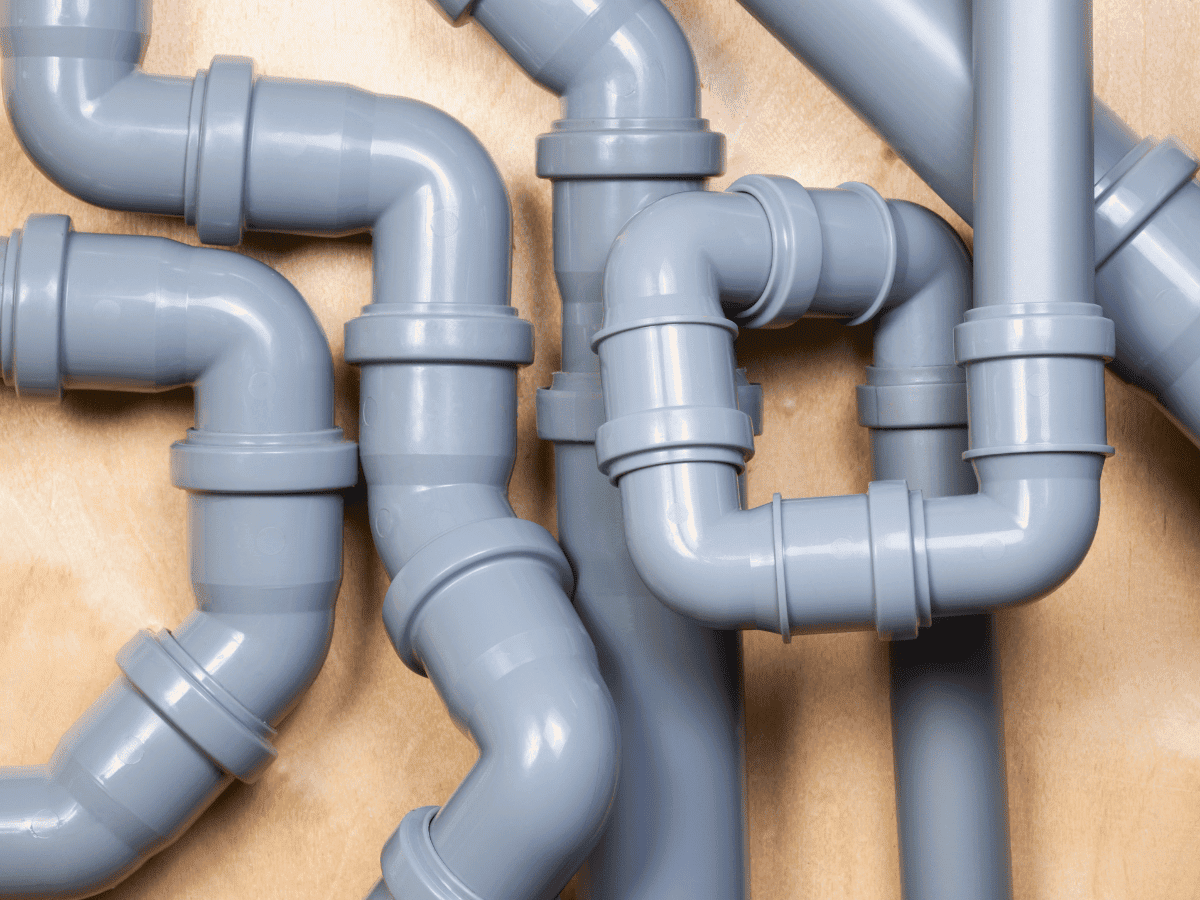
Lifespan: 100+ years
Advantages: Rigid structure provides excellent strength, proven performance over 50+ years, smooth interior for excellent flow, resistant to corrosion, widely available, lower material cost than HDPE.
Best For: Slip lining applications, traditional excavation installs, straight runs.
Note: Schedule 40 or Schedule 35 SDR-35 approved for sewer applications.

Lifespan: 50-80 years (now failing)
Why It Fails: Hydrogen sulfide from sewage converts to sulfuric acid on pipe walls, acid corrodes iron from inside creating channeling and holes, exterior soil conditions accelerate corrosion, eventually walls perforate completely.
Status: No longer installed. All cast iron eventually requires replacement. If your home has cast iron 50+ years old, consider proactive replacement before failure.

Lifespan: 50-75 years (now failing)
Why It Fails: Tiles connected by mortar joints, mortar deteriorates allowing separation, roots enter every separated joint, tiles crack under soil pressure, misalignment creates flow restrictions.
Status: Not used since 1970s. Clay tile lines over 60 years old typically need replacement. Modern materials vastly superior.
$10,000-$25,000
Complete trenchless replacement, depending on method and length
Line Length: Residential sewer lines typically 100-200 feet from house to street. Longer lines require more pipe and labor. Cost per foot decreases with length due to equipment setup efficiency—200-foot line costs less per foot than 100-foot line.
Pipe Depth: Standard burial depth (4-8 feet) included in standard pricing. Deeper lines (8-12+ feet) increase access pit depth and equipment requirements. Shallow lines (under 3 feet) may limit trenchless options.
Soil Conditions: Normal soil (sand, loam, clay) handles standard pricing. Rocky soil or hardpan may require additional equipment. Extremely soft or wet soil needs special handling. We assess during inspection.
Access Complexity: Clear access at both ends is ideal. Obstructions (large trees, hardscaping, structures) near access points increase difficulty. Limited workspace increases labor time and cost.
Diameter and Upsizing: Standard residential replacement (4-inch to 4-inch) baseline pricing. Upsizing to 6-inch adds 10-20% for larger pipe and equipment. Pipe bursting can upsize while slip lining reduces diameter slightly.
Permit Requirements: Most municipalities require permits for sewer line work ($100-$500). We handle all permitting. Some areas mandate inspection at various stages adding timeline considerations.
Restoration Needs: Trenchless methods require minimal restoration (small pit backfill and sod patches). Traditional excavation requires extensive restoration—sod/landscaping ($2,000-$8,000), concrete driveways ($3,000-$15,000), asphalt ($2,000-$8,000).
Cost Component | Trenchless Replacement | Traditional Replacement |
New Pipe & Materials | $4,000-$8,000 | $3,000-$6,000 |
Equipment & Labor | $5,000-$12,000 | $4,000-$8,000 |
Excavation | $1,000-$3,000 (two small pits) | $8,000-$15,000 (continuous trench) |
Property Restoration | $500-$2,000 (minimal) | $5,000-$20,000 (extensive) |
TOTAL COST | $10,500-$25,000 | $20,000-$49,000 |
Timeline | 1-3 days | 1-2 weeks + restoration |
Property Impact | Minimal | Extensive destruction |
Value Proposition: Trenchless replacement costs 40-60% less than traditional methods while providing superior pipe materials (HDPE/PVC vs. potentially inferior alternatives) with 100+ year lifespan. You save $10,000-$25,000, preserve your property, and get faster completion.
Two small access pits (3×4 feet each) versus continuous trench destroying your entire yard. Your landscaping, mature trees, driveway, sidewalks, and hardscaping remain intact. This preservation protects property value and eliminates restoration headaches.
Modern HDPE and PVC pipes installed via trenchless methods last 100+ years—essentially permanent. This replacement likely outlasts your ownership and possibly the next ownership too. You’re solving sewer problems for generations. Compare to cast iron (50-80 years) or clay tile (50-75 years) requiring eventual replacement.
Complete replacement in 1-3 days versus 1-2 weeks for traditional excavation plus additional restoration time. Faster completion means less disruption to your daily life and quicker resolution of sewer problems. Most homeowners operational with new line within 48 hours.
HDPE and PVC pipes resist corrosion (unlike cast iron), remain impervious to root intrusion (no joints for roots to enter), maintain smooth interior for excellent flow, withstand soil movement and settling better than historic materials, require essentially zero maintenance. These materials represent generations of advancement over what’s probably failing in your yard now.
When sewer lines collapse completely—pipe walls fail entirely creating flat sections—repair is impossible. Collapsed pipes require replacement. Pipe bursting works perfectly for collapsed lines, bursting through failed sections while installing new pipe. Camera inspection clearly shows collapsed areas.
Orangeburg pipe (bituminous fiber conduit) installed 1950s-1970s deteriorates severely after 30-50 years. This material delaminates, compresses to oval shape under soil pressure, and crushes. Orangeburg pipes deformed beyond recognition cannot be repaired—only replaced. If your home has orangeburg pipe, replacement is inevitable.
Severe root intrusion throughout entire line length (not just isolated sections) indicates the pipe has separated at numerous joints or developed cracks everywhere. While root cutting and lining repairs isolated root problems, extensive infestation throughout 80%+ of line makes replacement more practical.
Severe bellying (sagging creating permanent low spots) causes chronic drainage problems. While minor bellies sometimes respond to linisng, severe bellies with multiple sag points throughout line require replacement to properly restore slope and flow.
and all Wayne and Monroe County communities.
Replace when: pipe completely collapsed throughout, orangeburg pipe deteriorated, severe damage affecting 60%+ of line, multiple previous repairs have failed, pipe material at end of service life (cast iron 60+ years, clay tile 70+ years). Repair when: pipe maintains structural shape, damage localized to under 50% of line, modern pipe materials still serviceable. Our video inspection and honest assessment guide this critical decision.
Trenchless replacement completes in 1-3 days typically. Slip lining often finishes in 1-2 days. Pipe bursting requires 2-3 days for most residential applications (100-150 feet). Extended length or complex situations may need additional time. Traditional excavation requires 1-2 weeks plus restoration time. We provide accurate timeline estimates after inspection.
No. Trenchless replacement creates two small access pits (3×4 feet each) at line ends—typically at house foundation and street connection. Your landscaping, mature trees, driveway, and hardscaping remain completely intact. This is the transformative advantage of trenchless technology. Traditional replacement destroys everything along pipe path.
For trenchless replacement, HDPE (High-Density Polyethylene) is industry standard—exceptionally strong, completely flexible, root-proof, 100+ year lifespan. PVC also excellent—rigid, strong, proven performance, 100+ year lifespan. Both vastly superior to cast iron, clay, or orangeburg. We use HDPE for pipe bursting and either HDPE or PVC for slip lining based on your situation and preference.
Trenchless sewer line replacement costs $10,000-$25,000 depending on method and length. Slip lining ($10,000-$15,000) most affordable, pipe bursting ($12,000-$22,000) mid-range, traditional excavation ($20,000-$50,000) most expensive when restoration included. Trenchless saves $10,000-$25,000 while providing superior results and faster completion.
Thompson Trenchless provides lifetime workmanship warranty on all sewer line replacements. HDPE and PVC pipe materials carry manufacturer warranties ranging from 50 years to lifetime depending on specific product. Our comprehensive warranty transfers to future property owners. This replacement is essentially permanent.
HDPE and PVC sewer pipes last 100+ years—essentially permanent. Modern pipe materials resist corrosion, root intrusion, and chemical damage indefinitely. Expected lifespan exceeds 100 years based on current data and accelerated aging tests. Your replacement likely outlasts your lifetime and possibly your children’s lifetime. This is truly a permanent solution.
Most municipalities require permits for sewer line replacement ($100-$500). We handle all permitting and inspections on your behalf—you don’t deal with any paperwork or bureaucracy. Some jurisdictions mandate inspection at various installation stages to ensure proper materials and slope. We coordinate everything ensuring full compliance with all local codes.
Three decades installing trenchless sewer lines throughout Wyandotte, Monroe, and Downriver Michigan
We recommend repair whenever viable because it costs less and works well. When replacement is necessary, we explain exactly why
Comprehensive coverage on all installation labor
Michigan licensed, fully insured, workers compensation coverage
Detailed written estimates, no hidden fees or surprises
Consistently excellent satisfaction across all platforms
Pipe bursting, slip lining, traditional excavation—we recommend what's truly best for your situation
Complete HD documentation showing pipe condition and why replacement is recommended
HDPE and PVC pipes lasting 100+ years, not inferior alternatives
We manage permitting and inspections—you deal with nothing
Trenchless methods protect your investment and property value
Read what customers say: Customer Reviews