
Replace Deteriorating Clay Pipes with Modern PVC
Thompson Trenchless provides professional clay pipe replacement services throughout Wyandotte, Monroe, and Downriver Michigan—comprehensive solutions replacing deteriorating clay sewer pipes common in homes built 1920s-1970s before modern PVC became standard. Clay pipes suffer inevitable deterioration after decades underground becoming brittle, cracking from ground movement, separating at vulnerable joints, and providing easy entry points for aggressive tree root intrusion. These inherent material weaknesses make clay pipes problematic requiring endless maintenance managing recurring failures versus modern materials providing decades trouble-free operation.
Most Michigan properties built 1920s-1970s contain clay sewer lines now 50-100 years old approaching or exceeding typical 50-80 year serviceable lifespan. Clay’s brittle ceramic nature creates vulnerability—while initially strong when new, clay becomes increasingly fragile with age cracking easily under stress. Joint connections using bell-and-spigot with cement or tar particularly vulnerable—connections deteriorate allowing separation and providing root entry points. Property owners face recurring problems: repeated root removal every 1-2 years costing hundreds each service, frequent repairs addressing cracks and breaks, drainage problems from deteriorating pipe interiors. These ongoing issues stem from fundamental clay material limitations—patching individual problems temporarily but not addressing underlying brittleness and vulnerability causing endless failures.
We provide appropriate solutions ending clay pipe problems permanently.
Replacement with Modern PVC: Most common and cost-effective long-term solution—remove deteriorating clay, install modern PVC with sealed joints eliminating root entry and cracking concerns, provides 100+ year essentially-permanent installation ending ongoing clay maintenance cycles. Trenchless Pipe Lining: For clay pipes showing moderate deterioration but substantial remaining structure—liner seals cracks and joints preventing root entry while reinforcing brittle clay, extends life 50+ years at lower cost than excavation though doesn’t eliminate underlying clay brittleness completely. With 30+ years experience throughout Wayne County and Monroe County replacing aging clay systems, we provide expert camera diagnosis revealing actual clay condition, honest assessment of whether repair adequate or replacement necessary, and professional installation creating lasting solutions eliminating endless clay problems permanently.




Clay pipe deterioration occurs through multiple mechanisms inherent to ceramic material properties.
Brittleness Development: Clay pipes manufactured through firing ceramic material at high temperatures creating hard strong material when new. However, clay inherently brittle—doesn’t bend or flex under stress but instead cracks. This brittleness worsens with age as material structure degrades from decades underground exposure. Ground movement, settling, freeze-thaw cycles, and tree root pressure all create stresses. Unlike flexible modern PVC absorbing movement, brittle clay cracks under same stresses. After 50-80 years, clay becomes extremely fragile—minor ground shifts creating cracks where young clay pipe might resist damage.
Joint Vulnerability: Clay pipes manufactured in short sections (typically 2-4 feet) joined using bell-and-spigot connections with cement or tar sealing. These joints represent fundamental weakness—cement and tar deteriorate over decades losing sealing capacity and structural integrity. Joint deterioration allows: sections separating creating gaps or offsets, roots entering through deteriorated joints becoming primary intrusion mechanism, groundwater infiltrating causing erosion around pipes, sewage leaking contaminating surrounding soil. Joint problems universal in aging clay systems—every joint potentially vulnerable after 50+ years underground.
Freeze-Thaw Damage: Michigan’s harsh winters create freeze-thaw cycles particularly damaging to clay pipes. Moisture infiltrating through hairline cracks or joints freezes expanding. Ice expansion creates pressure forcing cracks wider. Repeated freeze-thaw cycles over decades progressively worsen small cracks into large fractures eventually causing complete breaks. Shallow clay pipes above proper frost line depth (42+ inches Michigan) experience most severe freeze-thaw damage. Many clay systems installed 50-100 years ago used shallower depths than modern standards—4-5 feet common versus 5-6+ feet today—leaving pipes vulnerable to frost damage accumulating over decades creating progressive deterioration.
⏰ Clay Pipe Age and Failure Risk
Installation Era Timeline: Homes built 1920s-1940s almost certainly contain clay sewer lines now 80-100+ years old—extreme age with high failure probability requiring comprehensive assessment. Homes built 1950s-1960s likely have clay now 60-75 years old—approaching or exceeding typical lifespan warranting proactive evaluation. Homes built 1960s-1970s may have clay 50-60 years old—entering high-risk period as brittleness accelerates. Homes built late 1970s-1980s may have transitioned to PVC avoiding clay problems entirely. Knowing home age immediately indicates clay presence probability and approximate condition range.
Expected Serviceable Life: Clay pipes typically serviceable 50-80 years though actual varies by conditions. Optimal conditions (stable soil, proper depth, minimal tree exposure, quality original installation)—might achieve 70-90 years. Average conditions—expect 50-70 years before significant recurring problems. Harsh conditions (unstable clay soils, shallow installation, large trees nearby, poor original installation)—may see major failures by 40-60 years. Any clay over 60 years warrants comprehensive inspection—approaching high-risk period where failures accelerate dramatically.
Failure Acceleration Timeline: 0-40 years—typically serviceable with minor issues. 40-60 years—beginning deterioration, cracks developing, root problems starting. 60-80 years—moderate to severe problems, frequent service needs, multiple cracks and breaks. 80+ years—extreme brittleness, catastrophic failure risk, comprehensive replacement typically most appropriate. Timeline provides general guidance but actual condition requires camera inspection documenting real deterioration not just age-based assumptions.
Clay pipe failures stem from inherent material characteristics making long-term reliability problematic.
Brittle Ceramic Nature: Clay’s fundamental property—brittle ceramic doesn’t accommodate movement. Ground settling, frost heaving, root pressure, traffic loads all create stresses. Modern PVC flexes absorbing movement—clay cracks. This brittleness makes clay unsuitable for underground applications experiencing inevitable ground movement over decades. While initially adequate when new and ground stable, accumulated decades of minor movements progressively damage brittle clay creating cracks, breaks, and failures.
Joint Design Weakness: Bell-and-spigot joints with cement or tar sealing represent outdated technology compared to modern solvent-welded PVC joints. Clay joints never truly permanent—rely on compression and sealant maintaining contact. Decades underground exposure deteriorates sealants, ground movement separates sections, roots force joints apart. Joint failures create multiple problems—sewage leaks, infiltration, root entry points, offset misalignments. Modern glued PVC joints create permanent chemical bonds essentially fusing pipe into continuous sealed length—eliminates joint-related problems plaguing clay systems.
Root Magnet Properties: Clay pipe joints provide easy root entry—deteriorated joint sealants leave gaps roots penetrate. Once inside, roots proliferate rapidly exploiting moisture and nutrients. Clay’s porosity also allows moisture penetrating through walls creating root-attracting conditions. Properties with mature trees near clay sewers experience chronic root problems—removing roots temporarily but joints remain open allowing immediate re-entry. Endless cycle continues until clay replaced with root-proof modern materials eliminating entry points permanently.
Classic Clay Problem: Most characteristic clay pipe issue involves recurring root intrusion requiring repeated professional removal every 12-24 months. Roots enter through deteriorated joints, grow into substantial masses blocking drainage, get cut during service, but immediately re-enter through same open joints creating endless cycle. If property requires annual or biennial root service, clay joints almost certainly providing entry points. Modern root removal technology clears blockages temporarily but cannot seal clay joints—roots return indefinitely until clay replaced with sealed modern materials eliminating entry access. Pattern of recurring root problems in older homes strongly indicates clay pipes requiring replacement ending cycle permanently versus continuing expensive repeated clearing treating symptoms never solving underlying joint vulnerability.
Structural Failure Evidence: Clay brittleness creates vulnerability to cracking and breaking under stresses absorbed by flexible modern materials. Camera inspection reveals characteristic clay damage patterns: hairline cracks developing into larger fractures, complete circumferential breaks separating sections, multiple cracks throughout indicating advanced brittleness, shattered sections where severe stress exceeded capacity. Surface evidence includes: sewage odors from leaks through cracks, wet spots in yard above cracked sections, sudden drainage worsening suggesting new major crack development, visible settling or sinking indicating soil erosion from leaking cracks. Cracked clay requires comprehensive evaluation—isolated crack might receive spot repair but multiple cracks throughout system indicate advanced deterioration warranting complete replacement addressing systemic brittleness not just current visible cracks.
Progressive System Failure: Increasingly frequent sewage backups indicate advancing clay deterioration. Initially occasional backups responding to cleaning—over months and years, frequency increases requiring service every few months then monthly or more. Progressive worsening suggests multiple contributing factors: cracks catching debris creating blockages, joint separations restricting flow, root masses regrowing rapidly through open joints, interior roughness from deterioration promoting accumulation. Pattern of accelerating backup frequency characteristic of dying clay systems—underlying deterioration worsening causing symptoms increasing despite repeated service. Continuing cleaning treats symptoms temporarily never addressing structural clay problems driving deterioration—comprehensive replacement eliminates causes preventing recurrence permanently.
Underground Leak Indicators: Soft soggy areas in yard suggest sewage or groundwater problems from failing clay pipes. Cracked or separated clay leaks sewage saturating surrounding soil creating persistently wet areas. Alternatively, groundwater infiltrating through clay damage erodes soil creating voids—ground above settles creating depressions or soft spots. Soft areas typically located along sewer line path—strip following buried pipe or isolated spots above specific failures. Severe leaks create obvious sinkholes where extensive soil erosion occurred. Lush grass growth in affected areas from leaked sewage providing fertilizer nutrients. Any unexplained soft spots or settling along probable sewer routes warrant immediate investigation—failing clay causing active leaks requiring repair preventing property damage and environmental contamination.
Definitive Condition Documentation: Professional video camera inspection provides comprehensive clay condition assessment. Camera reveals: multiple cracks throughout system indicating advanced brittleness, separated joints with visible gaps or offsets, heavy root intrusion concentrated at joints, interior surface deterioration and roughness, complete breaks or collapsed sections. Moderate deterioration shows: some cracks and joint issues, manageable root intrusion, generally intact structure despite problems. Severe deterioration reveals: extensive cracking throughout, multiple separated joints, massive root infiltration, structural collapses or near-collapses. Camera documentation eliminates uncertainty—objective visual evidence of actual conditions enabling appropriate recommendations whether repair adequate for moderate problems or replacement necessary for severe widespread deterioration.
Recurring root problems every year? Frequent repairs in a home built before 1970? Camera inspection reveals if clay pipe deterioration requires replacement.
Primary Clay Failure Mechanism: Root intrusion at deteriorated joints represents most common and problematic clay pipe failure. Bell-and-spigot joints sealed with cement or tar deteriorate over decades. Sealants crack, crumble, or wash away leaving gaps. Tree roots detect moisture and nutrients from sewage leaking through gaps. Fine roots enter then proliferate inside pipe creating massive fibrous obstructions. Roots hold joints open preventing natural closure—actively worsen separation by wedging sections apart. Properties with mature trees (willows, maples, poplars) within 30-50 feet of clay sewers experience chronic severe root problems. Annual or biennial root cutting provides temporary relief but roots immediately re-enter through same open joints. Endless expensive cycle continues until clay replaced with modern PVC featuring sealed joints eliminating root access permanently. Root problems in clay systems indicate joint deterioration—addressing roots without joint sealing wastes money treating symptom while cause persists.
Brittle Material Response: Clay’s brittle nature makes cracking inevitable when ground movement occurs. Michigan clay soils shrink during dry periods and expand when wet creating substantial seasonal ground shifting. Frost heaving during winter lifts ground unevenly. Long-term settlement from soil consolidation creates differential movement. Traffic loads from vehicles create vibration and compaction. All movements stress buried pipes—flexible PVC absorbs movement, brittle clay cracks. Initial hairline cracks widen over years from repeated stress cycles. Multiple freeze-thaw events force cracks wider each winter. Eventually hairline cracks become major fractures or complete breaks. After 60-80 years, accumulated ground movement damage creates extensive cracking throughout clay systems. Camera inspection shows characteristic patterns: multiple cracks at regular intervals, circumferential breaks where sections separated completely, longitudinal cracks along pipe length from bending stress. Extensive cracking indicates clay reached end of serviceable life—brittleness so advanced that replacing rather than patching individual cracks provides only reliable solution.
Connection Failure: Bell-and-spigot joints designed for compression fit with sealant maintaining connection. After decades, sealants deteriorate losing adhesion. Ground movement creates stress pulling sections apart. Roots wedge into gaps forcing separation. Result: joints offset vertically (one section drops), horizontal misalignment (sections shift sideways), rotational displacement (sections twist), or complete separation with substantial gaps. Separated joints create multiple problems: sewage leaking into surrounding soil, groundwater infiltrating overwhelming system capacity, debris catching at irregular joint surfaces, roots entering through gaps. Separated joints also indicate ground movement issues—unstable soils or erosion creating conditions allowing separation. Single isolated separated joint might receive spot repair—multiple separated joints throughout system suggest widespread instability warranting comprehensive replacement with modern materials and proper stabilization preventing recurrence.
Catastrophic Structural Failure: Advanced clay deterioration progresses to complete collapse where pipes structurally fail closing opening entirely or nearly entirely. Extreme brittleness combines with ground pressure, root damage, freeze-thaw cycles, or other stresses exceeding remaining clay strength. Collapsed section creates complete blockage preventing drainage requiring emergency service. Common collapse scenarios: heavily-cracked clay crushed by ground pressure, severely root-damaged sections held together only by root masses then collapsing when roots removed, freeze-damaged clay shattering during severe cold snap, traffic loads crushing shallow severely-weakened clay. Collapsed sections require immediate repair—cannot function at all unlike cracks or joint separations maintaining partial capacity. Most collapses require excavation accessing and replacing failed section—too severe for lining bridging. Multiple collapses indicate system-wide advanced deterioration—piecemeal section repairs temporary as other vulnerable areas collapse soon requiring comprehensive replacement eliminating all deteriorated clay preventing ongoing catastrophic failures.
Professional video camera inspection documents clay pipe cracking patterns revealing deterioration severity. Camera advancing through line shows: hairline cracks appearing as thin lines in pipe walls (early deterioration), wider cracks with visible gaps showing light or soil through openings (moderate damage), complete circumferential breaks where sections separated into pieces (severe failure), multiple cracks in close proximity indicating advanced brittleness (critical condition). Crack distribution provides condition assessment—isolated single crack suggests localized stress potentially manageable through spot repair, numerous cracks throughout system indicates advanced widespread brittleness warranting comprehensive replacement not patchwork repairs.
Crack characteristics reveal clay condition: fresh clean cracks with sharp edges suggest recent failure from sudden stress, weathered cracks with rounded edges and soil intrusion indicate long-standing damage progressively worsening, cracks with root penetration demonstrate crack age allowing root establishment. Camera documents exact crack locations using distance markers enabling precise repair planning—know exactly which sections require attention versus assuming entire system equally damaged. Still images extracted from video footage provide visual documentation for records, insurance purposes, or property transfer disclosures—objective evidence eliminating disputes about actual conditions.
Camera inspection evaluates joint conditions throughout clay system revealing vulnerability and deterioration.
Joint Identification: Clay sections typically 2-4 feet long creating joints every few feet throughout system. Camera operator identifies joints by visible connection lines, slight diameter changes at bell-and-spigot connections, or material color variations. Documenting joint locations enables calculating joint quantity—typical residential system might contain 20-40 joints from house to street, each representing potential failure point.
Joint Deterioration Evidence: Camera reveals joint problems: visible gaps showing light or soil through separations, offset misalignment where sections shifted out of proper alignment, roots concentrated at joints indicating entry through deteriorated seals, missing or crumbled sealant material visible around connections, infiltration water streaming through joint gaps during inspection. Moderate joint problems show: minor gaps under 1/2 inch, slight offsets, manageable root intrusion at some joints. Severe joint problems reveal: substantial gaps over 1 inch, complete separations, massive root infiltration at multiple joints, significant misalignments.
Joint Failure Patterns: When many joints show deterioration—sealant failure throughout, multiple separations, widespread root entry—indicates systemic joint failure from age and material deterioration not isolated problems. This pattern strongly suggests replacement more appropriate than attempting to repair numerous individual joints throughout aging system. Comprehensive joint failure demonstrates clay system reached end of serviceable life—fundamental joint technology inadequate for continued reliable operation.
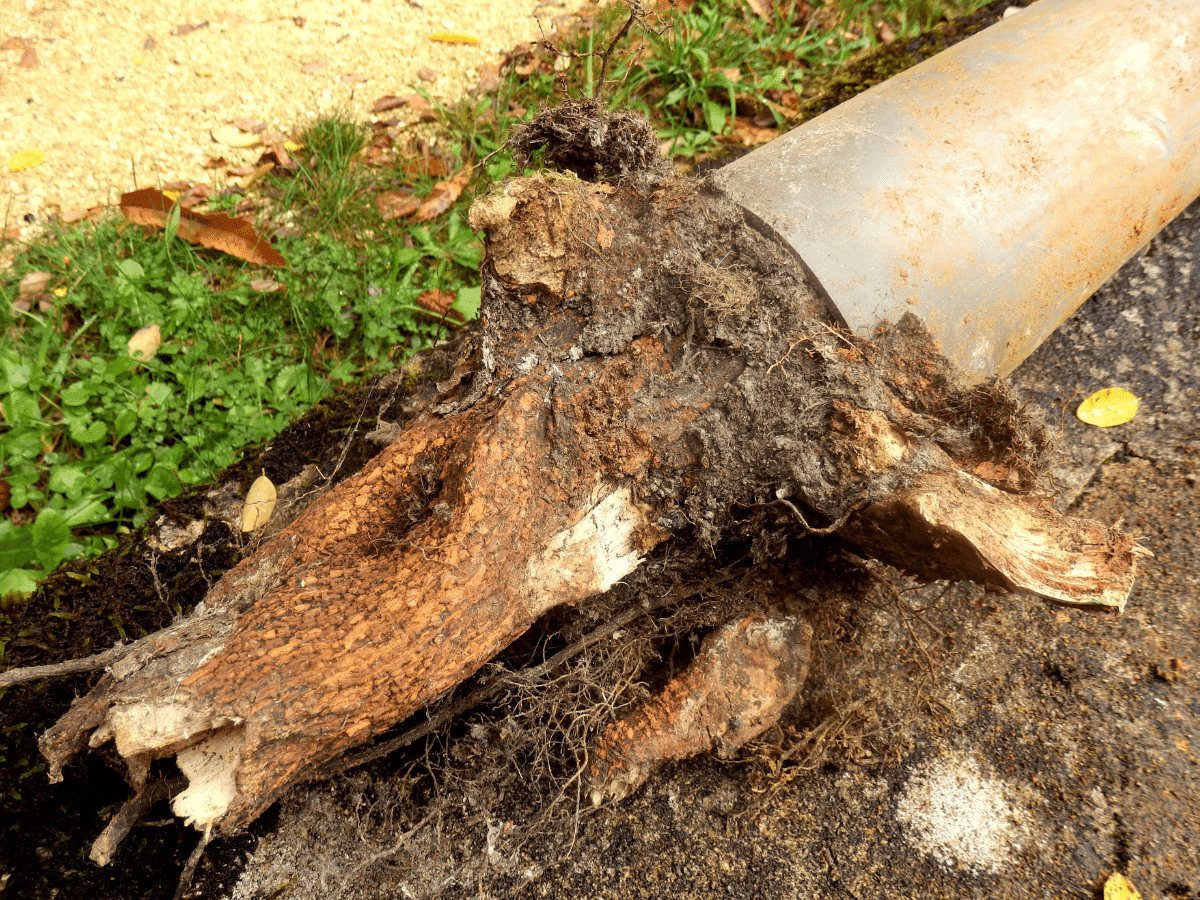
Camera inspection documents root intrusion extent and locations.
Root Concentration at Joints: Heavy root masses concentrated at specific joint locations versus distributed throughout line clearly identifies joints as entry points. Roots entering through deteriorated joint seals then proliferating inside pipe creating obstructing masses. Camera shows fibrous root balls completely filling pipe cross-sections at joints while adjacent pipe sections relatively clear—definitive evidence of joint-related root entry.
Root Severity Assessment: Camera reveals root intrusion extent: light roots—fine hair-like roots beginning to enter, easily cleared but indicate ongoing entry problem. Moderate roots—substantial fibrous masses partially restricting flow, require professional cutting, rapid regrowth expected. Severe roots—complete obstructions filling entire pipe diameter, massive woody roots requiring aggressive cutting, immediate regrowth through open joints. Root severity combined with joint deterioration evidence indicates whether root removal adequate temporarily or replacement necessary permanently eliminating entry points preventing endless recurrence.
Reinforcement Without Excavation: Trenchless pipe lining provides alternative to excavation for clay pipes showing moderate deterioration but retaining substantial structure. Process installs epoxy liner inside clay pipe sealing cracks and joints while reinforcing brittle material. Liner creates seamless interior surface preventing root entry through sealed joints, filling cracks preventing leaks and progressive widening, providing structural reinforcement preventing further cracking. Extends clay system life 50+ years while avoiding excavation costs and property disruption—typically $8,000-$15,000 versus $15,000-$30,000 excavation replacement.
Best Candidates for Lining: Clay systems showing: moderate cracking without complete breaks or collapses, joint deterioration but sections maintaining reasonable alignment, manageable root problems after thorough cleaning, overall structural integrity despite deterioration. Camera inspection reveals whether clay suitable—must retain sufficient structure supporting liner installation and providing adequate substrate for liner bonding. Very brittle advanced-deterioration clay might crumble during liner installation preventing successful completion—conservative assessment necessary determining lining feasibility.
Lining Limitations: Lining doesn’t eliminate underlying clay brittleness—reinforces and protects but doesn’t transform clay into modern material. Severely deteriorated clay with: extensive complete breaks or collapsed sections, extreme brittleness crumbling during handling, multiple major structural issues throughout—generally beyond lining capabilities requiring excavation replacement. Additionally, lining permanent solution only with proper installation on adequate substrate—attempting lining on inadequate severely-deteriorated clay risks installation failure wasting money requiring excavation anyway. Honest professional assessment critical—recommend lining when appropriate saving excavation costs, acknowledge limitations requiring excavation when clay condition exceeds lining capabilities.
Complete System Modernization: Traditional excavation replacement removes all deteriorated clay installing modern PVC throughout—most comprehensive and permanent solution. Process excavates trenches exposing entire clay line from house to street, removes all clay sections eliminating deterioration concerns completely, installs new PVC with solvent-welded sealed joints immune to root entry and separation, provides modern code-compliant system with 100+ year expected life. Most appropriate for: severely deteriorated clay beyond repair, very old systems (70-100+ years) at end of life, properties with ongoing chronic problems from fundamental clay inadequacy, situations demanding complete permanent modernization not temporary patches.
Excavation Process: Professional replacement follows systematic standards: expose and remove all clay sections properly disposing heavy material, prepare proper bedding and slope preventing settlement, install PVC with precise joint preparation and solvent welding, backfill with properly-compacted material in lifts preventing voids, restore surfaces professionally repairing lawn, driveway, or hardscaping. Timeline typically 3-7 days depending on length and complexity—significant disruption but results in comprehensive permanent solution eliminating all clay-related problems forever.
Cost Range: Excavation replacement typically $15,000-$30,000 residential depending on: line length (50-100 feet typical house to street), depth (4-8 feet for residential sewers), access conditions and site constraints, surface restoration requirements. More expensive than lining but provides complete modernization—eliminates all clay limitations creating essentially permanent modern system. Best long-term value for severely deteriorated clay despite higher initial cost—avoids ongoing repair cycles managing inevitable failures in inadequate dying material.
Replacement Without Full Excavation: Pipe bursting offers middle-ground solution—replaces clay with modern PVC using trenchless methods minimizing excavation. Process: insert bursting head into existing clay pipe at one end, pull bursting head through length using powerful hydraulic equipment, bursting head fractures and displaces clay outward while pulling new HDPE pipe into space created, minimal excavation required only at entry and exit points for equipment access. Results in completely new pipe replacing clay without extensive trenching—property disruption significantly less than traditional excavation.
When Appropriate: Pipe bursting works well for: properties with established landscaping or hardscaping making full excavation very expensive, clay lines with reasonable alignment despite deterioration, adequate depth and clearances allowing bursting head passage, situations where excavation access extremely difficult or impossible. Cost typically $12,000-$22,000 depending on length and conditions—more than lining, less than full excavation—providing complete clay replacement with moderate property disruption. Not suitable for all situations: extreme misalignments, very shallow installations, obstacles preventing bursting head advancement, or certain soil conditions. Requires professional evaluation determining pipe bursting feasibility for specific situation.
Selection depends on clay condition, property circumstances, budget, and long-term goals.
Decision Framework: Moderate deterioration + retained structural integrity + budget constraints = lining appropriate providing 50+ years extension at reasonable cost. Severe widespread deterioration + very old clay (70+ years) + chronic recurring problems = excavation replacement most cost-effective despite higher initial cost providing permanent modernization. Established landscaping + reasonable clay condition allowing replacement + bursting feasibility = pipe bursting optimal balancing complete replacement with minimal disruption.
We provide honest expert assessment after comprehensive camera inspection. Explain all feasible options with realistic pros/cons and costs specific to your situation. Some contractors push unnecessary expensive excavation—we recommend lining when appropriate saving costs. Other contractors push lining on everything even severely deteriorated clay beyond repair—we acknowledge lining limitations and recommend replacement when necessary. Our goal: match solution to actual conditions providing best long-term value not maximizing our immediate revenue or minimizing upfront cost leading to expensive failures.
Clay pipe repair addresses specific current problems but cannot eliminate fundamental material brittleness causing ongoing failures.
Progressive Deterioration Continues: Repairing today’s visible crack or separated joint doesn’t prevent tomorrow’s new crack or separation—underlying brittleness remains and worsens. After 60-80 years underground, clay reached advanced fragility where additional cracks and breaks inevitable regardless of current repairs. Think of clay like old glass—repairing one crack doesn’t make glass less fragile overall. Each repair temporary solution in progressively-failing system.
Endless Repair Cycle: Properties managing aging clay through repeated repairs spend thousands over years never achieving lasting solution. Repair cracked section today costing $2,000-$4,000—next year different section cracks requiring another $2,000-$4,000. Over 10 years, multiple repairs total $10,000-$20,000 or more with clay still deteriorating requiring continued future repairs. Alternatively, comprehensive replacement at $15,000-$30,000 eliminates clay permanently ending repair cycles—one-time investment versus endless piecemeal expenses never solving fundamental problem. Smart long-term perspective: accept reality that deteriorated brittle clay cannot be made reliable again through repairs, invest in modern replacement creating decades trouble-free operation.
Clay joints provide root entry requiring annual or biennial professional root removal costing $300-$600 each service = $3,000-$6,000 over 10 years never solving problem permanently.
Open Joint Reality: Root cutting clears current obstruction but cannot seal deteriorated joints—roots immediately begin re-entering through same gaps. Within 12-18 months, new root mass recreates blockage requiring another service. Cycle continues indefinitely as long as clay joints remain open. Some properties require annual service for decades spending $5,000-$10,000+ managing root symptoms never addressing underlying open-joint cause.
Replacement Eliminates Entry: Modern PVC with solvent-welded sealed joints eliminates all root entry points—joints chemically bonded creating continuous sealed pipe roots cannot penetrate. Properties replacing clay with PVC stop having root problems completely—no more annual service, no more root-related backups, no more ongoing expenses. Root removal savings alone often justify replacement costs within 10-15 years—after that, pure savings plus avoiding drainage disruptions and emergency situations. For properties with chronic recurring root problems, replacement provides only permanent solution ending expensive endless cycle.
Replacement provides superior long-term value despite higher initial cost.
Cost Comparison Over 20 Years: Managing deteriorating clay: repeated root removal $300-$600 annually = $6,000-$12,000, multiple repairs for cracks/breaks $2,000-$4,000 each = $8,000-$16,000 for 3-4 repairs, emergency service premiums and property damage risks, total estimated $15,000-$30,000+ with problems persisting. Replacement one-time investment: $15,000-$30,000 creates modern system, eliminates ongoing repair and root removal costs, prevents emergency failures and property damage, provides 100+ year essentially-permanent solution.
Break-even: 8-12 years typically—after that, pure savings every year while enjoying trouble-free operation versus continuing management of failing clay.
Property Value Impact: Modern PVC sewer system adds property value and buyer appeal. Known clay sewer problems reduce property values and complicate sales requiring disclosures, inspections, potential buyer demands for repairs or price reductions. Replacement before sale eliminates complications enabling smooth transactions at full market value. Even without immediate sale plans, replacement provides peace of mind—no worrying about next clay failure, no emergency situations at inconvenient times, no ongoing maintenance hassles. Quality of life improvement plus financial benefits make replacement smart long-term investment for properties with aging deteriorated clay systems.
PVC provides optimal combination of strength and flexibility unlike brittle clay.
Impact Resistance: PVC absorbs impacts that shatter clay—ground settling, frost heaving, minor ground shifts all accommodated through PVC flexibility without cracking. PVC bends slightly under stress then returns to original shape—doesn’t accumulate damage like clay. This resilience critical for Michigan conditions with freeze-thaw cycles, clay soils, and other stressors causing inevitable ground movement over decades. PVC maintains structural integrity indefinitely where clay progressively cracks and deteriorates.
Lightweight Benefits: PVC weighs fraction of clay—easier handling during installation reducing labor costs. Long PVC sections (10-20 feet typical) versus short clay sections (2-4 feet) mean fewer joints—fewer potential failure points creating more reliable system. Lightweight also reduces transportation and equipment costs contributing to overall installation efficiency and cost-effectiveness.
Modern PVC joints eliminate root entry problems plaguing clay systems.
Solvent Welding Technology: PVC joints created through solvent welding—chemical process that literally fuses pipe sections together. Solvent softens PVC surfaces at connection point, sections pressed together while soft, chemical reaction bonds molecular structures creating single continuous piece. Result: joints chemically identical to rest of pipe—no gaps, no weakness, complete seal. Roots cannot penetrate solvent-welded joints—no entry points exist unlike deteriorated clay joints with gaps.
Root Prevention Benefits: Properties replacing clay with PVC experience: complete elimination of root intrusion problems, no more annual or biennial root removal service, no more root-caused backups or emergencies, savings of $300-$600 annually forever. These benefits alone often justify replacement costs within 10-15 years. Additionally, eliminates drainage disruptions, property damage risks, and stress from recurring root problems. For properties with large trees (willows, maples, poplars) near sewers experiencing chronic root issues, PVC replacement provides only permanent solution ending endless expensive cycle.
PVC expected service life 100+ years versus 50-80 for clay—essentially permanent installation.
No Deterioration Mechanisms: PVC immune to all deterioration affecting clay: doesn’t become brittle with age maintaining flexibility indefinitely, immune to freeze-thaw damage—doesn’t absorb water so no freeze expansion stress, not affected by soil chemicals or moisture, smooth interior doesn’t develop roughness or buildup. PVC maintains like-new condition decades after installation—no progressive deterioration requiring eventual replacement like clay. Install PVC today, expect reliable operation for remaining property ownership plus several more ownership cycles—truly long-term investment.
Warranty Coverage: Quality PVC installations carry comprehensive warranties—typically 50-100+ years on materials and workmanship. Manufacturers stand behind products knowing PVC longevity proven through decades field experience. This warranty protection provides assurance and financial security—extremely unlikely ever needing replacement within any reasonable timeframe. Compare clay lacking warranties beyond short initial period because manufacturers understand inevitable eventual failure. PVC warranty coverage demonstrates material confidence completely absent with inherently-problematic clay.
$15,000-$30,000
Complete excavation replacement with modern PVC
Best for: Moderate clay deterioration with retained structural integrity, budget constraints, property conditions making excavation extremely expensive
Best for: Severe clay deterioration, very old systems (70+ years), chronic recurring problems, desire for complete permanent modernization
20-Year Cost Comparison:
Managing Deteriorating Clay: Annual root removal $400 × 20 years = $8,000, crack/break repairs $3,000 average × 5 occurrences = $15,000, emergency service premiums and property damage = $2,000-$5,000, ongoing stress and inconvenience = priceless. Total: $25,000-$30,000 minimum with problems continuing.
Complete PVC Replacement: One-time investment $15,000-$30,000, zero ongoing repair costs, zero root removal costs, zero emergency situations, complete peace of mind. Total: $15,000-$30,000 final—no additional costs forever.
Break-Even Analysis: Replacement typically pays for itself within 8-12 years through eliminated ongoing costs. After break-even, pure savings every year—$400-$800 annually not spent on root removal, $500-$1,000+ annually not spent on various repairs. Over 30-40 years typical remaining homeownership, savings total $15,000-$30,000+ beyond initial replacement investment. Smart financial decision: accept higher upfront cost creating permanent solution versus lower initial repairs leading to endless expensive ongoing maintenance never solving fundamental problems.
Professional clay replacement begins with comprehensive assessment.
Camera Inspection Throughout: Complete video inspection from house to street documenting entire system condition—all cracks, joint deterioration, root intrusion, structural issues. Distance markers note exact problem locations enabling accurate planning. Inspection reveals whether isolated problems suitable for spot repairs or widespread deterioration warranting complete replacement. Documentation provides objective visual evidence supporting recommendations and serving as project baseline.
Scope Development: Assessment determines replacement extent—entire main line house to street (most common), specific sections if truly isolated problems with sound surrounding pipe, branch connections if needed, cleanout installations for future access. Accurate scoping prevents cost overruns and ensures comprehensive problem addressing not just obvious issues leaving vulnerable sections failing soon. Professional assessment includes: line length measurement, depth determination for excavation planning, surface restoration requirements identification, access constraints evaluation, permit requirements verification.
Quality PVC installation follows professional standards ensuring optimal performance and longevity.
Proper Bedding: Install pipe on uniform compacted gravel or sand bed—minimum 6 inches beneath pipe, extending 12 inches beyond pipe sides. Proper bedding provides: stable uniform support preventing settling, adequate drainage around pipe, protection from rocks and debris. Bedding critical for long-term performance—inadequate bedding allows settlement creating stress potentially damaging even durable PVC over decades.
Precise Slope: Maintain minimum 1/4 inch per foot slope throughout (preferably 1/2 inch per foot) ensuring gravity drainage. Verify slope using levels during installation—don’t rely on eyeballing. Inadequate slope creates drainage problems even with perfect pipe material and installation.
Joint Preparation: Clean and dry all joint surfaces, apply proper primer softening PVC surfaces, apply adequate solvent cement, press and hold sections ensuring complete contact while solvent cures. Proper solvent welding critical creating permanent sealed joints—rushed or inadequate joint preparation leaves weaknesses compromising system integrity.
Professional replacement includes comprehensive property restoration returning conditions to pre-construction status or better.
Backfill Standards: Backfill with properly-compacted material in lifts—typically 6-12 inch layers compacted mechanically before adding next layer. Proper compaction prevents settlement creating surface depressions or stress on pipes from voids. Use appropriate materials—avoid large rocks, frozen clumps, debris that create voids or damage pipes.
Surface Restoration: Lawn areas receive topsoil placement, grading, and seeding or sodding matching existing grass. New lawn requires watering and establishment care over weeks. Driveway sections receive appropriate replacement—concrete cutting, removal, new concrete placement matching existing. Asphalt areas get proper base preparation and new asphalt matching existing grade and finish. Professional restoration integrates repairs nearly invisibly—evidence of work minimal after completion and establishment. Budget includes restoration costs—comprehensive professional work provides quality results justifying investment in permanent solution.
and all Wayne and Monroe County communities.
Clay pipe replacement costs $15,000-$30,000 for complete excavation replacement with modern PVC (typical 50-100 feet residential). Standard replacement $15,000-$25,000, extended or complex $20,000-$40,000+. Trenchless lining alternative $8,000-$18,000 for moderate clay deterioration. Pipe bursting $12,000-$22,000 when feasible. Actual cost depends on line length, depth, access conditions, surface restoration requirements. Despite higher initial cost, replacement saves money long-term—eliminates ongoing repair and root removal costs totaling $25,000-$30,000+ over 20 years managing deteriorating clay.
Clay sewer pipes typically last 50-80 years though varies by conditions. Optimal conditions—might achieve 70-90 years. Average conditions—expect 50-70 years before significant recurring problems. Harsh conditions—may deteriorate by 40-60 years. Clay over 60 years warrants comprehensive assessment—approaching high-risk period where brittleness accelerates and failures multiply. After 70-80 years, deterioration so advanced that replacement typically more appropriate than attempting repairs managing inevitable ongoing failures in dying material.
Yes, isolated cracks can be repaired through spot excavation or trenchless lining sealing cracks. However, cracked clay indicates brittleness—repairing visible cracks doesn’t prevent new cracks developing elsewhere as underlying fragility remains and worsens. Multiple cracks throughout system suggest advanced deterioration better addressed through comprehensive replacement than piecemeal repairs. Camera inspection throughout entire system reveals whether problems truly isolated (repair reasonable) or widespread (replacement more cost-effective long-term preventing ongoing repair cycles).
Clay pipes crack from inherent brittleness worsening with age. Brittle ceramic material doesn’t flex under stress—cracks instead. Causes include ground movement (settling, frost heaving, soil expansion-contraction), root pressure wedging cracks wider, freeze-thaw cycles forcing moisture-filled cracks apart, traffic loads and vibrations, decades of accumulated minor stresses exceeding degraded clay strength. After 50-80 years underground, clay becomes extremely fragile cracking easily under stresses absorbed by flexible modern PVC without damage.
Depends on age and condition. Very old clay (70-100+ years) with widespread problems—complete replacement most cost-effective providing permanent modern system. Moderate age (50-70 years) with moderate deterioration—trenchless lining might extend life 50+ years at lower cost. Younger clay (under 50 years) with isolated issues—spot repairs or monitoring appropriate. However, properties with chronic recurring problems (annual root removal, frequent repairs)—replacement eliminates endless expensive cycles regardless of age. Camera inspection reveals actual conditions enabling appropriate decision whether repair adequate or replacement necessary long-term.
Not always but commonly. Clay pipe joints with deteriorated seals provide easy root entry—roots detect moisture and nutrients from sewage leaks. Properties with large trees (willows, maples, poplars) within 30-50 feet of clay sewers typically experience significant root intrusion requiring annual or biennial removal. Properties without nearby large trees may have minimal root problems despite clay pipes. However, even without current root problems, clay joints remain vulnerable—if large trees planted or existing small trees mature growing near sewers, root intrusion will develop eventually exploiting open clay joints.
Modern PVC pipes vastly superior: flexible absorbing ground movement without cracking, solvent-welded sealed joints preventing root entry and separation, smooth interior providing optimal flow, immune to freeze-thaw damage and soil chemicals, 100+ year expected life versus 50-80 for clay, comprehensive warranty coverage. For replacement or new installations, PVC standard choice providing essentially permanent maintenance-free operation. Clay served adequately when installed decades ago but modern materials eliminate all inherent clay limitations creating truly reliable long-term systems.
Yes, trenchless pipe lining works for moderately-deteriorated clay pipes retaining structural integrity. Liner seals cracks and joints, provides reinforcement, extends life 50+ years. Effective for clay with moderate issues—some cracking, joint deterioration, manageable root intrusion. Not effective for severely deteriorated clay with extensive breaks, collapses, or extreme brittleness. Camera inspection determines clay condition enabling appropriate recommendation whether lining adequate or replacement necessary. Lining costs less than replacement ($8,000-$18,000 vs. $15,000-$30,000) making attractive option when clay condition suitable.
Three decades replacing deteriorating clay throughout Wyandotte and Monroe
Cost-effective alternative when clay condition suitable avoiding excavation
Appropriate solution matching actual conditions not most profitable option
Comprehensive coverage on lining and replacement installations
Michigan licensed, fully insured, professional service standards
Accurate condition evaluation determining repair adequacy or replacement necessity
Modern sealed systems eliminating recurring clay problems permanently
Sealed PVC joints prevent root entry ending expensive recurring service
Professional surface restoration minimizing evidence of work
Complete visual evidence supporting recommendations and documenting results
Read what customers say: Customer Reviews
End recurring problems with modern PVC system