Blog

Thompson Trenchless and Hydro Jetting team member checks a pipe’s condition using a camera for safe repairs.

What Is the CIPP Process and What Are the Benefits of Pipe Lining?

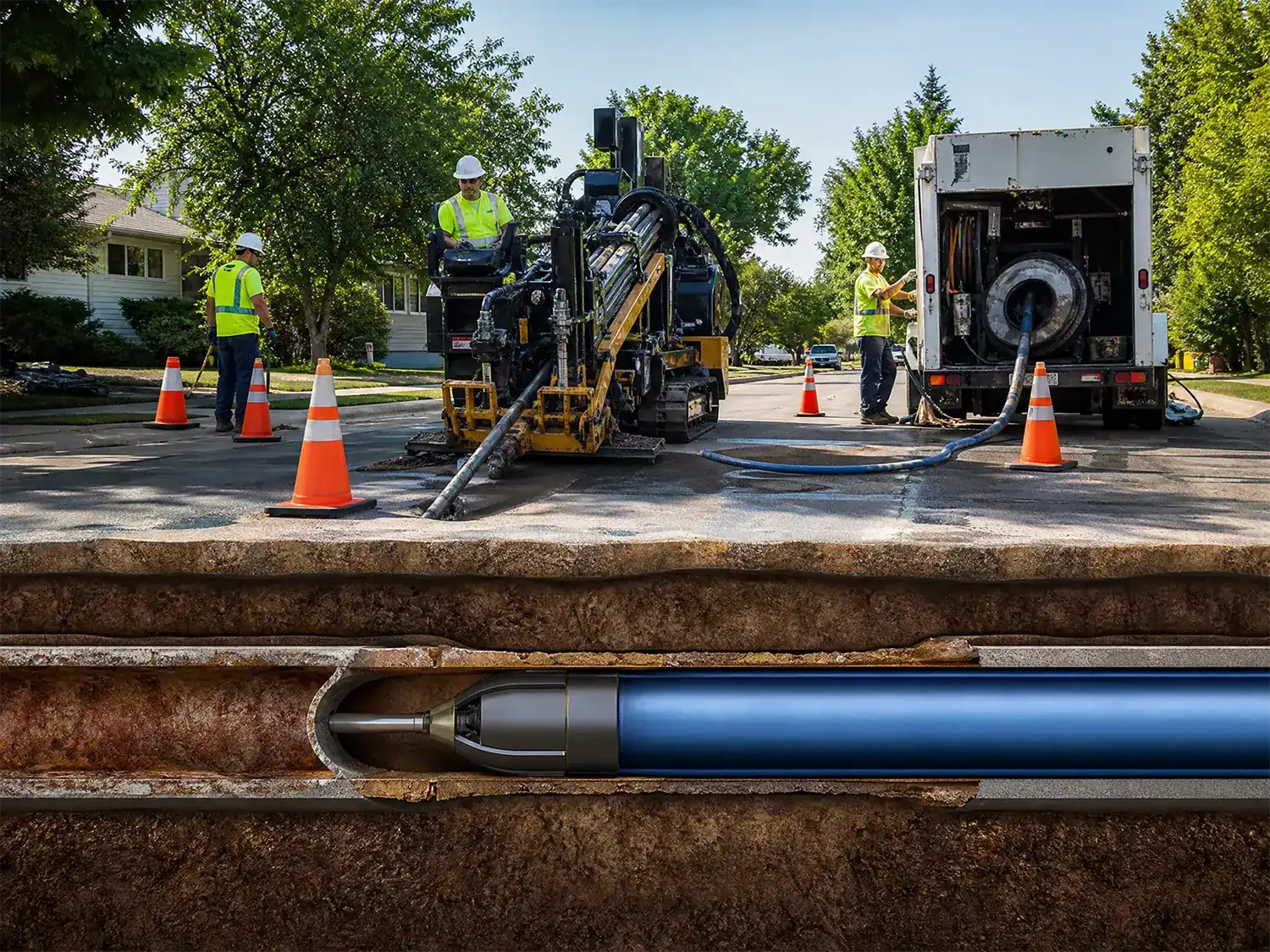
Quick Answer: The CIPP process (cured-in-place pipe lining) repairs damaged sewer and drain pipes without digging by inserting a resin-saturated liner into the existing pipe, inflating it against the pipe walls, and curing it into a smooth, seamless replacement pipe. Pipe lining benefits include lower costs than excavation, installation often

Read More »
Thompson Trenchless and Hydro Jetting explains how an underground drain pipe can clog from a dip that stops water flow.

What Causes Sewer Line Bellying?

Direct answer: Sewer line bellying happens when a section of underground pipe sinks below its proper slope, creating a low spot where water and waste collect instead of flowing to the sewer main. The most common causes are poor soil compaction during installation, natural soil settling, Michigan’s freeze-thaw cycles, and

Read More »
Tree roots have broken a sewer pipe, causing plumbing problems that Thompson Trenchless and Hydro Jetting can fix.

Tree Roots in Sewer Lines: Prevention and Solutions

Quick answer: Tree roots clogging sewer lines is one of the most common — and expensive — drain problems homeowners face. Roots enter pipes through tiny cracks or loose joints, then grow inward until they block flow entirely. The good news: if you catch it early, clearing the line and

Read More »
Thompson Trenchless uses a special CIPP liner to fix old pipes, stop leaks, and help pipes last much longer.

How Long Does Pipe Lining Last?

A properly installed CIPP (cured-in-place pipe) liner is engineered to last 50 years or more, and most residential installs perform in the 50–60 year range. Real-world studies of liners pulled after 30+ years in service show they’re often still hitting their original strength specs — meaning many will outlive the

Read More »