
Direct answer: Sewer line bellying happens when a section of underground pipe sinks below its proper slope, creating a low spot where water and waste collect instead of flowing to the sewer main. The most common causes are poor soil compaction during installation, natural soil settling, Michigan’s freeze-thaw cycles, and erosion under the pipe. A sewer camera inspection is the only reliable way to confirm a belly and measure how severe it is.
What Is a Bellied Sewer Pipe?
A bellied sewer pipe is a section of sewer line that has sagged below the rest of the pipe, like a dip in a garden hose. Sewer lines rely on gravity, so they’re installed with a steady downhill slope — usually about a quarter inch of fall per foot of pipe. When part of the line sinks, that slope disappears. Wastewater slows down in the low spot, solids settle out, and the belly slowly fills with sludge, grease, and debris.
Plumbers also call this a “sag,” “low spot,” or “backfall.” Whatever the name, the result is the same: a sagging sewer line that drains poorly and clogs again and again. If you’re already dealing with repeat clogs, our sewer line repair page explains how bellies compare to other pipe problems like cracks and root damage.
What Causes a Sewer Line to Belly or Sag?
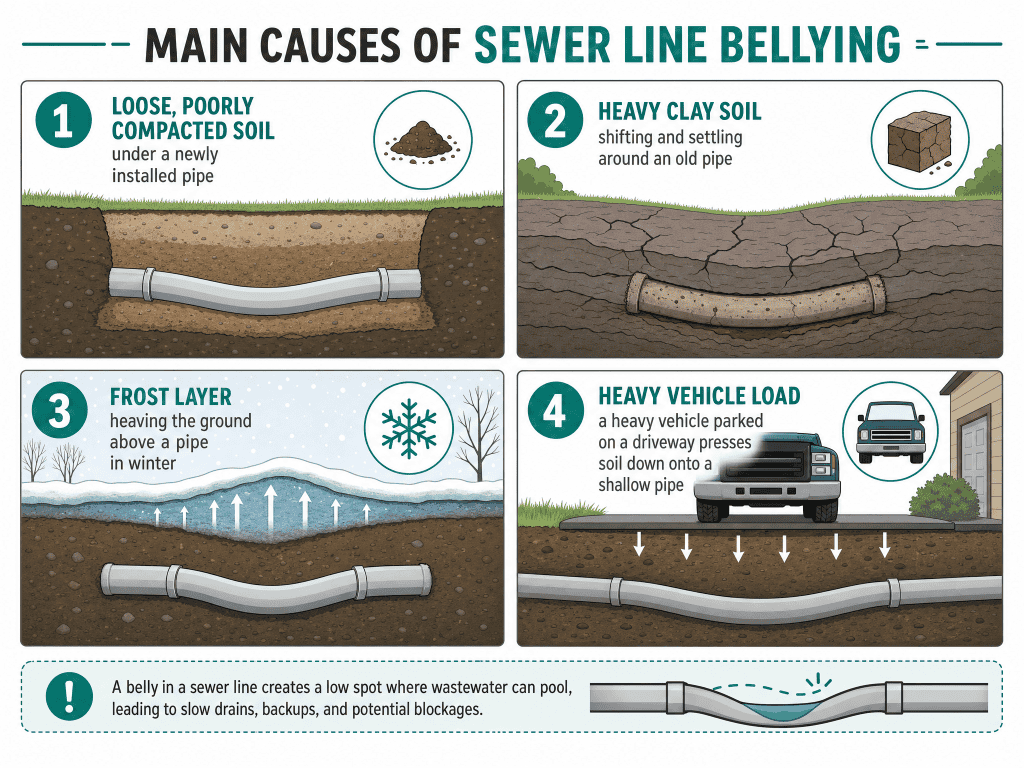
Bellies almost always come down to one thing: the soil under the pipe stopped supporting it. Here are the five most common reasons that happens.
1. Poor Installation and Bedding
The number one cause of sewer line bellying is improper bedding when the pipe was first installed. If the trench wasn’t compacted correctly, or the pipe was laid on loose fill instead of a stable base, the soil compresses over the following years and the pipe sinks with it. Homes in newer subdivisions aren’t immune — construction backfill that wasn’t compacted in lifts can settle for a decade after the house is built.
2. Natural Soil Settlement and Shifting Clay
Wayne and Monroe County properties sit on heavy clay soils that expand when wet and shrink when dry. That constant swelling and shrinking moves the ground around buried pipes. Over 50 to 100 years — the age of many Downriver sewer laterals — even a well-installed line can develop a sag as the clay beneath it shifts.
3. Michigan Freeze-Thaw Cycles
Southeast Michigan goes through dozens of freeze-thaw cycles every year. Frost pushes soil upward in winter, then the ground drops as it thaws in spring. This repeated heaving stresses pipe joints and disturbs the bedding under the line, gradually creating low spots — especially in older clay tile and cast iron pipes common in homes built before 1980.
4. Erosion and Water Table Changes
A small leak at a cracked joint can wash away the soil supporting the pipe, leaving a void that the pipe sinks into. High water tables near the Detroit River and heavy spring rains make this worse by saturating and softening the soil. In this case the belly is a symptom of a leak, which is why a proper diagnosis matters before any repair.
5. Heavy Loads Above the Pipe
Driveways, parked vehicles, sheds, and construction equipment all press down on the soil above a sewer lateral. If the pipe runs shallow or the bedding is weak, that weight can compress the soil and push the pipe down. Even mature tree roots can disturb bedding as they grow beneath a line.
Aging pipes make every one of these causes worse. The American Society of Civil Engineers gave U.S. wastewater infrastructure a D+ grade in its 2025 Infrastructure Report Card, noting that collection system failures are rising as pipes outlive their design lifespan — the same aging clay and cast iron found under many Downriver homes.
What Are the Signs of a Sagging Sewer Line?
A belly hides underground, but it leaves clues inside your home:
- Recurring clogs in the same line. The clog clears, then returns weeks or months later — the classic belly pattern, because debris keeps settling in the low spot.
- Slow drains throughout the house. Multiple slow fixtures point to a main line problem rather than a single clogged drain.
- Gurgling sounds. Air trapped behind standing water in the belly bubbles back through toilets and drains.
- Sewage odors. Waste sitting in the low spot releases gas that can travel back up the line.
- Soggy patches or indentations in the yard. A leaking belly can saturate the soil above it, and settling ground sometimes leaves a visible dip along the pipe’s path.
Left alone, these symptoms can end in a full sewage backup. The U.S. Environmental Protection Agency estimates tens of thousands of sanitary sewer overflows occur nationwide each year, and blocked or deteriorated pipes are among the leading causes — the same failure mode a neglected belly creates on your own property.
How Do You Confirm a Sewer Line Belly?
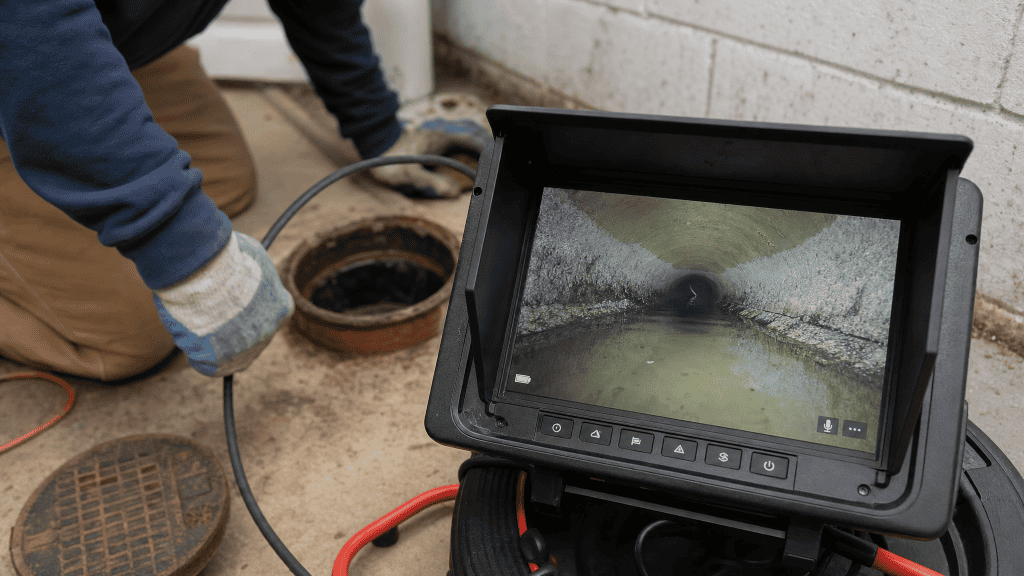
The only way to confirm a belly is to look inside the pipe. During a video camera inspection, a high-definition camera travels through your sewer line and shows exactly where water is pooling, how long the sagging section is, and how deep the dip goes. The footage also rules out look-alike problems — root intrusion, grease buildup, or a collapsed section — that cause similar symptoms but need very different repairs.
This step matters because clearing a bellied line without diagnosing it wastes money. The blockage comes back, because the low spot that caused it is still there.
Is a Bellied Sewer Pipe Serious?
It depends on the severity. A shallow belly holding a little water may only need periodic maintenance. A deep belly that traps solids is a different story: standing waste accelerates pipe corrosion, feeds repeat blockages, and can eventually lead to a sewage backup in your basement. Bellies also tend to get worse, not better — the added weight of trapped water and sludge keeps pressing the pipe into the soft soil beneath it.
One important distinction: a true belly (the pipe itself sagged) is different from “channeling,” where the bottom of a cast iron pipe corrodes away and mimics a dip on camera. The two look similar but are fixed differently, which is another reason professional diagnosis comes first.
How Do You Fix a Bellied Sewer Line?
The right fix depends on how severe the belly is:
- Minor bellies — maintenance. A shallow sag can often be managed with scheduled hydro jetting to flush settled debris out of the low spot before it builds into a clog.
- Moderate to severe bellies — grade correction. Because the pipe has physically sunk, the permanent fix is targeted excavation of the sagging section: the pipe is re-bedded on a properly compacted base and re-laid at the correct slope.
- Severely sagged or deteriorated lines — replacement. When a line has multiple bellies or the pipe material is failing, full sewer line replacement restores proper slope for the entire run.
An honest note about trenchless options: CIPP pipe lining is an excellent no-dig fix for cracks, root damage, and corrosion — but a liner follows the shape of the host pipe, so lining a belly leaves the same low spot in place. That’s why we diagnose first and recommend trenchless repair only where it actually solves the problem. If your line has both a belly and cracked sections, a combination approach — grade correction at the sag plus lining elsewhere — often delivers the best long-term value.
Can You Prevent Sewer Line Bellying?
You can’t control Michigan’s soil or weather, but you can lower your risk:
- Get a camera inspection before buying a home — especially for houses built before 1980 with clay or cast iron laterals.
- Schedule preventive drain cleaning every 2–3 years to keep debris from accumulating in minor low spots.
- Keep heavy vehicles and structures off the pipe’s path — know where your lateral runs before pouring a driveway or parking equipment.
- Fix leaks early. A small crack that erodes bedding today becomes a belly in a few years.
- Insist on proper bedding for any new installation — compacted stone or sand base, not loose backfill.
Think your sewer line has a belly? Thompson Trenchless & Hydro Jetting provides HD camera inspections and honest, diagnosis-first recommendations throughout Wyandotte, Monroe, and Downriver Michigan. Call (313) 488-3834 or request service online — we’ll show you exactly what’s happening in your pipe before recommending any repair. Schedule a Camera Inspection
Conclusion
- A bellied sewer pipe is a sunken section of line where waste collects instead of flowing to the main.
- Top causes: poor installation bedding, settling clay soil, Michigan freeze-thaw cycles, erosion from leaks, and heavy loads above the pipe.
- Warning signs: recurring clogs, slow drains house-wide, gurgling, sewer odors, and soggy spots in the yard.
- Pipe lining alone can’t fix a belly — the permanent fix is re-bedding the sagging section at the correct slope, or replacement for severe cases.
- A camera inspection confirms the diagnosis before you spend a dollar on repairs.
Frequently Asked Questions
Can a bellied sewer pipe fix itself?
No. Once the soil under a pipe settles or washes out, the pipe stays in that sunken position. The low spot keeps collecting waste, and the problem usually gets worse over time as more debris builds up and puts extra weight on the sagging section.
How much does it cost to fix a bellied sewer line?
Costs depend on the depth of the pipe, the length of the belly, and what sits above it. Minor spot repairs with grade correction typically start around a few thousand dollars, while severe bellies that require sewer line replacement cost more. A camera inspection gives you an exact diagnosis before any pricing is quoted.
Can pipe lining fix a bellied sewer line?
Usually not on its own. CIPP pipe lining follows the shape of the existing pipe, so a liner installed in a bellied section will have the same low spot. Lining works well for cracks, root damage, and corrosion, but true bellies typically need excavation to correct the pipe’s slope first.
How do I know if my sewer line has a belly or a blockage?
The symptoms look similar: slow drains, gurgling, and repeat backups. The difference is that a blockage stays fixed after one thorough cleaning, while a belly causes the same clog to return every few weeks or months. A sewer camera inspection shows exactly which one you have.
Is a small sewer belly an emergency?
A minor belly is not usually an emergency, but it should be monitored. Standing water in the low spot speeds up pipe deterioration and gives grease and debris a place to collect. Regular hydro jetting can manage a mild belly, but a worsening sag should be corrected before it leads to a full blockage or backup.
Does homeowners insurance cover a bellied sewer line?
Most standard policies treat bellying as gradual wear or ground settling, which is typically excluded. Some insurers offer optional service line coverage that may help. Check your specific policy, and get a camera inspection report so you have documentation of the pipe’s condition.